Best seller
Save £44.00
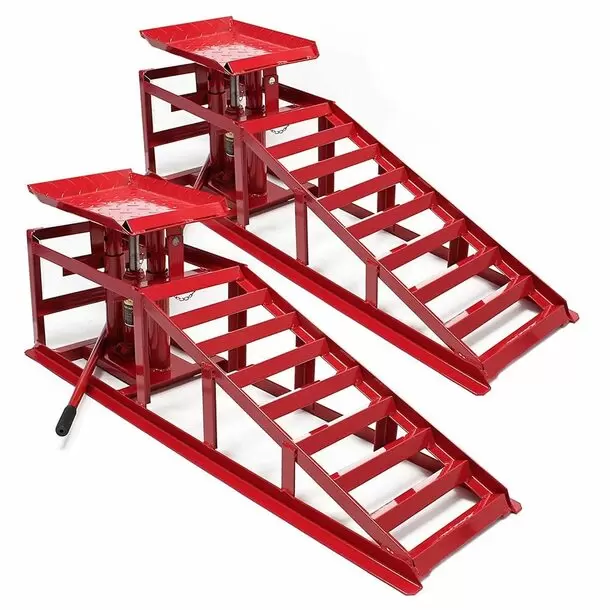
2pc Heavy Duty Car Garage Ramps - Hydraulic Auto Van Bottle Lift Jack Ramp 4 Ton
In stock — ship 1-3 days
£135.00 £179.00
Added to basket
Get the car up and keep it there. Heavy-duty steel ramps rated to 2 ton each, including hydraulic ramps with a built-in bottle jack for lifting rather than driving on.
In stock — ship 1-3 days
£135.00 £179.00
Out of stock
£112.73 £125.26
A standard drive-on ramp is a fixed wedge — you roll the front wheels up and stop. Cheap, fast, nothing to go wrong. A hydraulic car ramp has a built-in bottle jack, so the car goes on at ground level and is then lifted. That matters for two jobs: cars too low to climb a fixed ramp without scraping, and any job where you want to choose the working height rather than accept whatever the ramp gives you. Our 4 ton set is the hydraulic type.
Ratings are quoted both ways and it causes real confusion. A “4 ton set” means 2 ton per ramp — and since only two wheels go up, what matters is whether each ramp exceeds the axle load it will carry. As a rule, take the vehicle's kerb weight, assume roughly 60% sits on the front axle, halve it for each ramp, then add a margin. A 1,800 kg estate puts about 540 kg on each front ramp; a 2 ton rating gives you plenty of headroom. If a ramp's rating is close to your working figure, it is the wrong ramp.
This is the most common return reason in the whole category. Lowered cars, sports models and anything with a front lip will ground out on a standard ramp's incline before the tyre reaches the top. Measure your front overhang and ground clearance. If clearance is under roughly 130mm you want either a low profile ramp with a shallow approach angle, or a hydraulic ramp that lifts from flat and sidesteps the problem entirely.
Moulded plastic ramps are light and cheap and fine for a small hatchback on a garage floor. Steel takes more weight, tolerates uneven surfaces better and lasts, but it is heavier to move and will mark a driveway. For anything above a light car — vans, 4x4s, estates — steel is the only sensible answer.
Hiring ramps runs roughly £20–30 a day plus a deposit, and you collect and return them yourself. Our set is £135, so it pays for itself in around five or six days of hire — and after that it is in the garage every time you need an oil change, an exhaust job or a winter underseal, rather than needing booking in advance.
Oil and filter changes, exhaust inspection, underbody checks, gearbox and diff oil, underseal, and anything else that needs access to the middle of the car. What you cannot do is remove a front wheel — the wheels on the ramps are carrying the load. For wheel-off work you need a trolley jack and axle stands instead.
Last reviewed August 2026.
| Job | What you need | Why |
|---|---|---|
| Oil and filter change | Drive-on or hydraulic ramps | Wheels stay on; you only need sump access |
| Exhaust and underbody work | Hydraulic ramps | Choose the working height rather than accept a fixed one |
| Low or lowered car | Hydraulic ramps | Lifts from flat — no approach angle to ground out on |
| Van or 4x4 | Steel ramps, 2 ton per ramp minimum | Higher axle loads than a car; plastic will not do |
| Wheel or brake work | Trolley jack + axle stands | Ramps carry the load through the wheels, so they cannot come off |
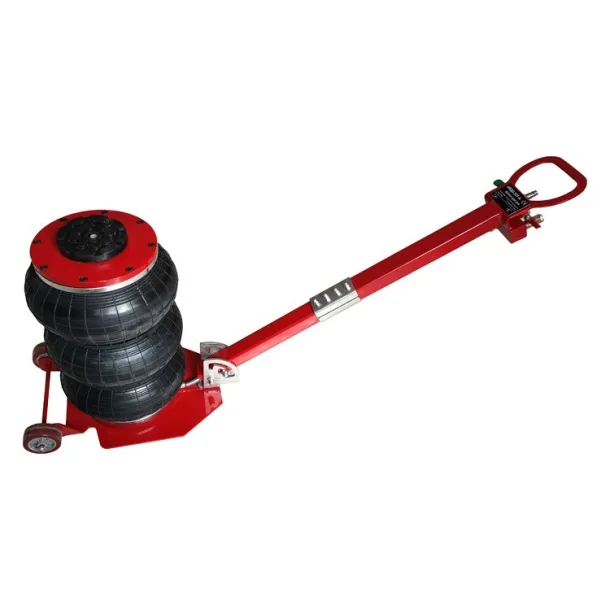
| Quick roadside or pit-lane lift | Air jack | Fastest lift available; needs a compressor or exhaust feed |
Ramps are safe to lift a car. They are not a substitute for axle stands. Chock the wheels still on the ground, apply the handbrake, leave the car in gear or Park, and place axle stands under the chassis before going underneath. Use them only on level solid concrete.
Only two wheels go up, so what matters is the load on each ramp. Take the kerb weight, assume roughly 60% on the front axle, halve it per ramp, then add a margin. Our ramps are rated 2 ton each, 4 ton for the set, which covers cars, vans and most 4x4s.
A fixed drive-on ramp may ground out on the front lip before the tyre reaches the top. Our hydraulic ramps lift from flat rather than requiring you to drive up an incline, so approach angle is not a problem.
A ramp lifts the car with the wheels still carrying the load — good for oil changes and underbody access. An axle stand supports the chassis with the wheel off, which is what you need for brakes, wheel bearings and suspension. Most home garages want both.
Only if it is level and solid. Block paving, gravel and soft tarmac can let a ramp sink or shift under load, and tarmac softens in summer heat. Level concrete is the only surface we would use them on.
Yes. Every order ships free to any UK mainland address — no minimum spend. Most in-stock items dispatch within 1–3 working days, and free 30-day returns are included on all orders.