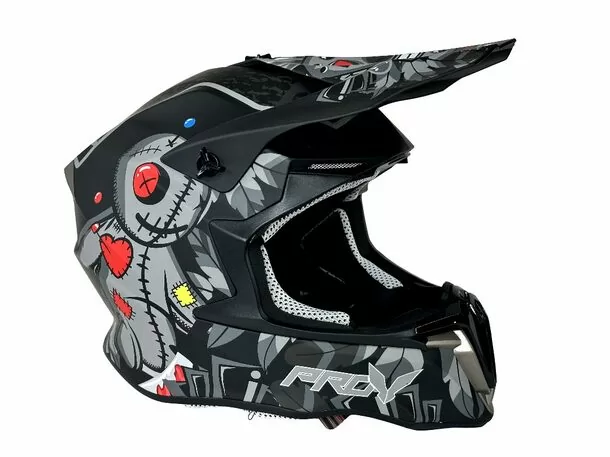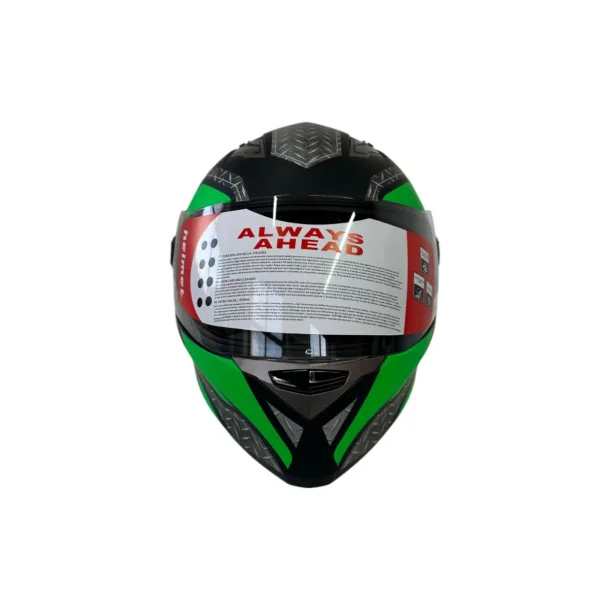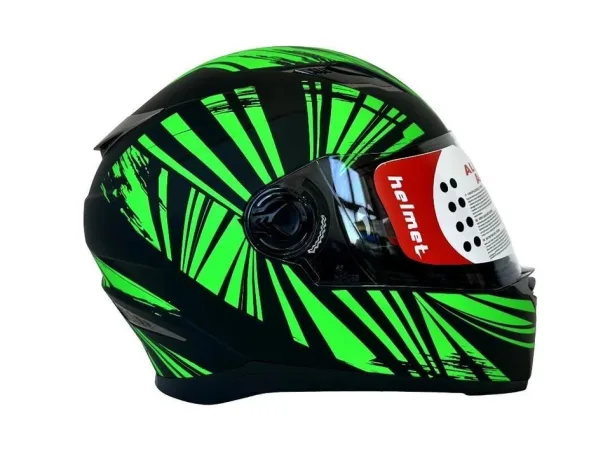
XTRON Neon Vortex Motorcycle Helmet Full Face Road Racing Safety Helmet
In stock — ship 1-3 days
£51.08 £56.75
Added to basket
Full face, dual sport and open face helmets for road, adventure and off-road riding. Every helmet lists its safety certification on its own product page.
In stock — ship 1-3 days
£51.08 £56.75
In stock — ship 1-3 days
from £52.25 £58.06
In stock — ship 1-3 days
£41.57 £46.19
In stock — ship 1-3 days
£39.20 £43.55
In stock — ship 1-3 days
from £45.43 £50.48
In stock — ship 1-3 days
from £52.26 £58.07
In stock — ship 1-3 days
£53.44 £59.38
UK law requires an approved helmet for road use. In practice that means a helmet carrying ECE approval or an equivalent recognised standard, and the label inside the helmet is where you check it — not the product photo, not the shape, not the price. ECE 22.06 is the current standard: it adds rotational and oblique impact testing and tests at more points on the shell than the older ECE 22.05. A 22.05 helmet you already own stays legal to wear. If you are buying new and the price difference is small, take the 22.06.
Full face is the only type that covers the chin, and the chin bar takes a meaningful share of impacts in real crashes. It is the default for road and motorway riding. Dual sport adds a peak and a wider aperture for goggles, with more venting — built for adventure, trail and green-lane riding where you are working harder and going slower. Open face gives you air, visibility and easy conversation at a stop, at the cost of chin protection. It suits low-speed town riding, scooters and classic bikes, and plenty of riders accept that trade knowingly.
A correctly certified helmet that fits badly protects worse than a cheaper one that fits properly. Measure around your head about 2cm above the eyebrows, at the widest point, and check against the size chart on the product page — shell sizing varies between makers, so your size in one brand is not your size in another. A new helmet should feel firm: snug on the cheeks, no pressure points, no movement when you shake your head with the strap done up. The lining beds in over the first few rides, so a helmet that feels loose in the shop will be too loose in a month.
A helmet you have to fight is a helmet you ride less carefully in. Check the visor changes without tools if you ride year-round, that the vents can be worked in gloves, and that the lining comes out to be washed. Anti-fog matters more than almost any other feature on a UK commute — either a pinlock-ready visor or a proven anti-fog coating.
The energy-absorbing liner crushes once, by design, and it does not recover — a helmet that has hit the road has done its job even if the shell looks unmarked. Replace it. The same applies to a helmet dropped hard onto a solid floor from height. Manufacturers also recommend replacing a helmet roughly every five years from first use, as the liner and straps degrade.
Last reviewed August 2026.
| Riding | Helmet type | From |
|---|---|---|
| Road, commuting and motorway | Full face — chin protection, best weather sealing | £51.08 |
| Adventure, trail and green lanes | Dual sport — peak, goggle aperture, high venting | £45.43 |
| Motocross and enduro | Dual sport / MX — worn with goggles | £45.43 |
| Town, scooter and classic bikes | Open face or half — no chin protection | £39.20 |
| Children and young riders | Not stocked — never fit an adult helmet to a child | — |
UK law requires an approved helmet for road use. Every helmet lists its certification on its own product page — check it before you buy, and check the label inside the helmet when it arrives. Certification varies between models, so we state it individually rather than making a blanket claim.
ECE 22.06 is the newer standard. It adds rotational and oblique impact testing and tests more points on the shell than ECE 22.05. A 22.05 helmet you already own remains legal to wear in the UK. If you are buying new and the price difference is small, choose the 22.06.
Measure around your head about 2cm above the eyebrows at the widest point, and check the size chart on the product page — shell sizing varies between makers. A new helmet should feel firm and snug on the cheeks with no pressure points and no movement when you shake your head with the strap fastened. The lining beds in, so anything loose now will be looser in a month.
An open face helmet protects the skull but leaves the chin and jaw exposed, and the chin bar takes a significant share of impacts in real crashes. It is a genuine trade-off rather than a straight downgrade: many town, scooter and classic riders accept it for the visibility and airflow. If you ride at motorway speeds, choose full face.
After any impact, without exception — the energy-absorbing liner crushes once by design and does not recover, even when the shell looks undamaged. The same applies if it is dropped hard onto a solid floor. Beyond that, manufacturers generally recommend replacement around five years from first use as the liner and straps degrade.
Not currently. Please do not fit an adult small to a child — the shell, the liner and the retention system are all sized for an adult head and it will not protect properly.
Yes. Every order ships free to any UK mainland address — no minimum spend. Most in-stock items dispatch within 1–3 working days, and free 30-day returns are included on all orders.