12V Tyre Repair Sealant Kit with Air Compressor 300ml Emergency Puncture Fix Car SUV
In stock — ship 1-3 days
£41.45 £46.06
Added to basket
Amber warning beacons and LED strobe light bars for recovery, breakdown, agricultural and plant vehicles, wired for 12V and 24V — plus emergency tyre repair kit for the roadside.
In stock — ship 1-3 days
£41.45 £46.06
In stock — ship 1-3 days
£136.61 £151.79
In stock — ship 1-3 days
£213.83 £237.59
Amber is the only beacon colour a civilian vehicle may generally display in the UK. It is associated with vehicles that are slow-moving, stationary at work, or presenting a hazard — recovery and breakdown, agricultural and plant, refuse and gritting, abnormal loads and escort vehicles, and road maintenance. Use is governed by the Road Vehicles Lighting Regulations 1989. Blue beacons are restricted to emergency services and green to registered doctors; fitting either without entitlement is an offence. If you are unsure whether your vehicle or work qualifies, check the regulations or ask your operator before buying.
Warning beacons for road use are normally approved to ECE R65, which sets minimum light output and flash characteristics. Class 1 covers stationary or slow working use. Class 2 is the higher output specification intended for use on a moving vehicle. Many sites, utilities, local authorities and fleet operators will accept nothing below Class 2, and some insurance and contract conditions name it explicitly. If you are buying for work rather than for a private drive, check the required class before you check the price.
A single rotating or strobe beacon is enough for a slow tractor or a van working on a verge, and it is cheap to fit. A light bar spreads the warning across the full width of the vehicle, which is what you want on a recovery truck where a driver behind needs to judge the size of the obstruction as well as notice it. Bar length should relate to vehicle width — a 2ft bar on a 7.5-tonne recovery truck looks like a car with its hazards on.
Cars, vans and 4x4s run 12V. HGVs, buses, most agricultural machinery and a lot of plant run 24V. Fitting a 12V-only beacon to a 24V system will destroy it in seconds. Dual-voltage units marked 12V/24V work on both, which is why they are the sensible choice for anyone running a mixed fleet or likely to move the light between vehicles.
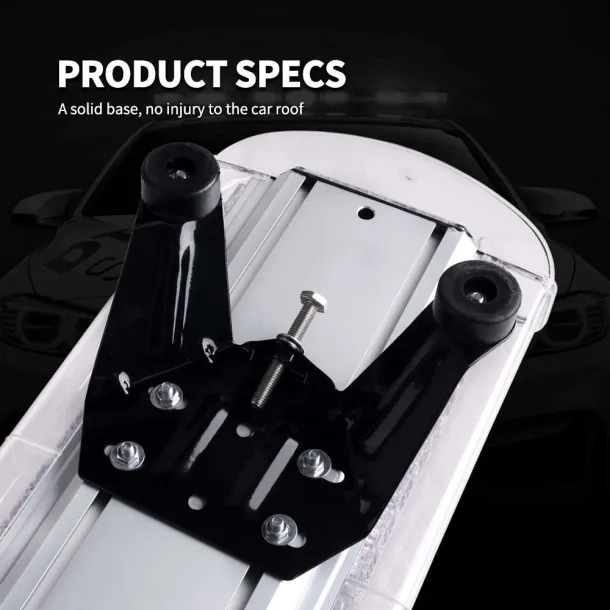
Magnetic mounts go on and come off in seconds and suit occasional use, but check the magnet strength against your working speed — a beacon that leaves the roof at 50mph is a serious hazard to the vehicle behind. Bolt-down is permanent, secure and the right answer for a dedicated recovery or utility vehicle. DIN pole mounts suit tractors and plant with an existing socket. Whichever you choose, route the cable so it cannot chafe and fuse it close to the battery.
Multi-pattern bars let you switch between rotate, strobe, sequential and other modes. In practice most operators pick one recognisable pattern and leave it — a warning light works because other drivers read it instantly, and an unfamiliar sequence slows that down. Choose on output, build quality and approval class rather than on the number of patterns.
Last reviewed August 2026.
| Vehicle or use | What you need | From |
|---|---|---|
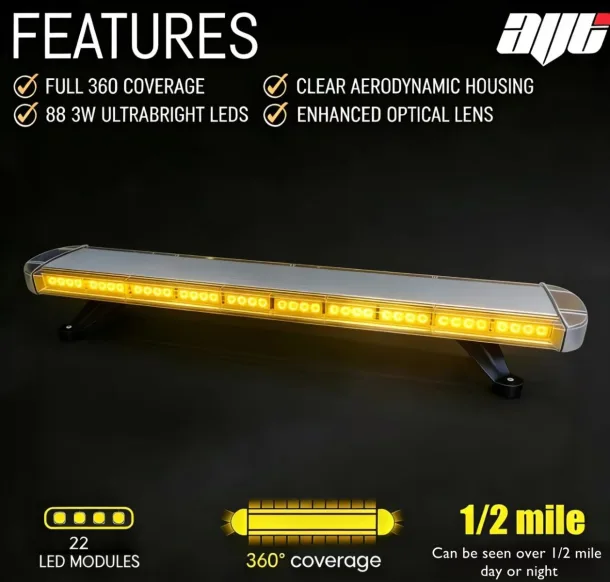
| Recovery truck, wide vehicle | 88 LED amber light bar, 12V/24V | £213.83 |
| Pickup, 4x4, utility van | 2ft amber strobe bar, roof mount | £136.61 |
| Roadside puncture, car or SUV | 12V tyre repair kit with compressor | £41.45 |
| HGV, bus, tractor, plant (24V) | Dual-voltage 12V/24V unit — a 12V-only light will fail | £136.61 |
| Emergency services use | Blue beacons — restricted, not sold here | — |
It warns other road users that the vehicle is slow-moving, stopped while working, or otherwise presenting a hazard — a recovery truck, gritter, refuse lorry, tractor, plant machine or utility vehicle. Unlike blue lights it does not mean the vehicle has priority; it means approach with caution and expect it to be slower than the traffic around it.
Amber is the beacon colour available to civilian vehicles in the UK, but use is tied to the vehicle and the work: slow-moving vehicles, breakdown and recovery, agricultural and plant, refuse and gritting, abnormal loads and escorts, and road maintenance. Use is governed by the Road Vehicles Lighting Regulations 1989. Blue beacons are restricted to emergency services and green to registered doctors. If you are unsure whether your use qualifies, check the regulations or ask your operator.
ECE R65 is the approval standard for warning beacons, setting minimum light output and flash characteristics. Class 1 covers stationary or slow working use; Class 2 is the higher output specification for use on a moving vehicle. Many sites, utilities, councils and fleet operators specify Class 2, and some contracts and insurance conditions name it. If you are buying for work, confirm the class required before ordering.
Only if it is dual voltage. Cars, vans and 4x4s run 12V, while HGVs, buses and most agricultural and plant machinery run 24V. Connecting a 12V-only unit to a 24V supply will destroy it immediately. Units marked 12V/24V work on both.
For occasional use at low speed, generally yes — but check the magnet strength against the speed you will actually drive. A beacon that leaves the roof at motorway speed is a serious hazard to the vehicle behind. For a dedicated recovery or utility vehicle, bolt it down.
Sealant kits are intended for small tread punctures — a nail or screw in the running surface. They will not seal a sidewall cut, a blowout or a bead failure, and a tyre repaired with sealant should be treated as a temporary fix and inspected by a fitter. Tell your fitter sealant has been used.
Yes. Every order ships free to any UK mainland address — no minimum spend. Most in-stock items dispatch within 1–3 working days, and free 30-day returns are included on all orders.